






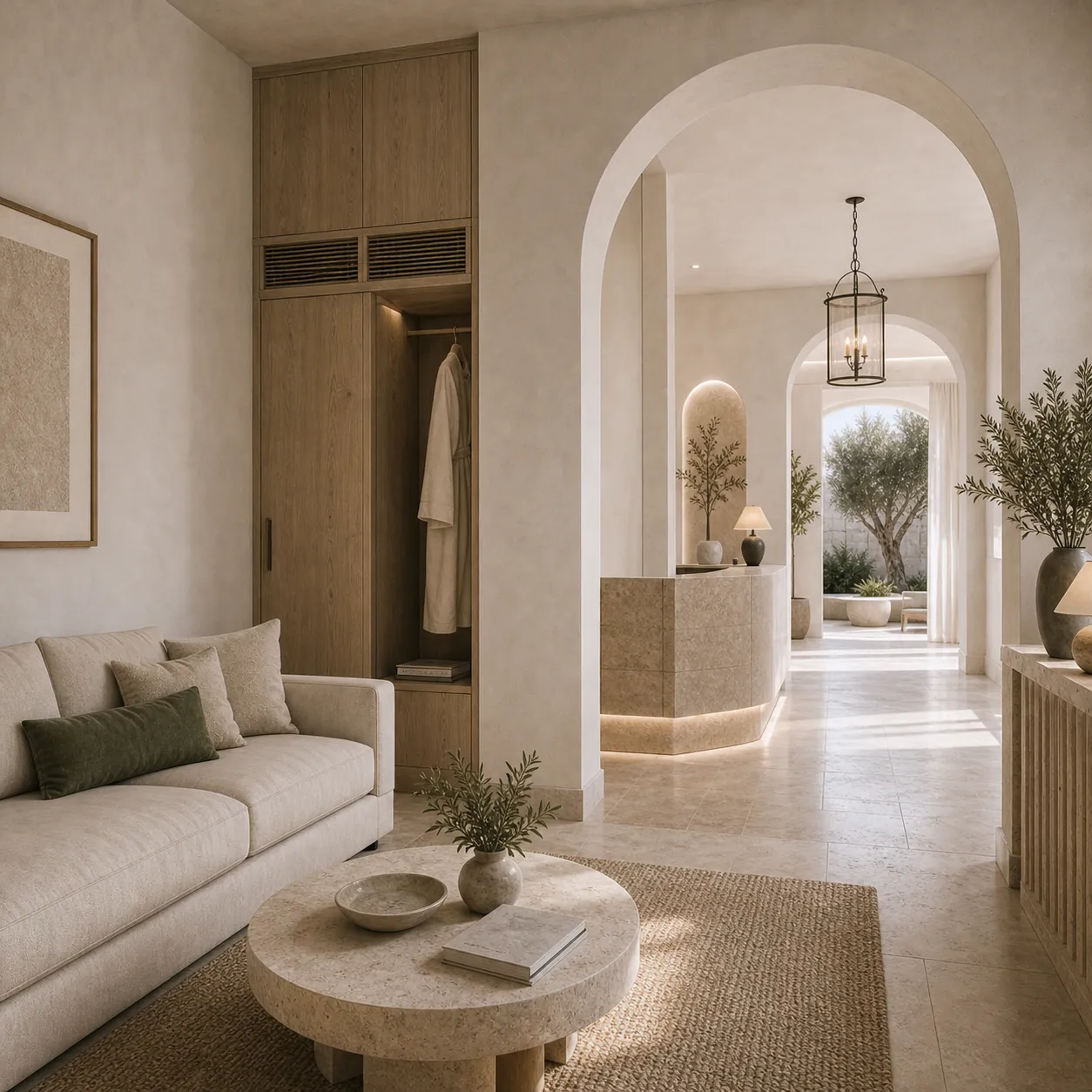
A boutique hotel renovation in Spain does not usually fail because one dramatic mistake appears at the end. It fails because six separate workstreams were allowed to drift apart for months: architecture, licensing, contractor coordination, FF&E procurement, operational setup and the digital booking launch.
Each team believes they are progressing. The architect is refining drawings. The contractor is pricing packages. The operator is preparing staff structure. The web team is designing the booking experience. The furniture supplier is confirming lead times. The licensing process is moving through its own calendar. Then, close to opening, everyone discovers that the project was never one project.
For a private investor, family office or hotel operator, this is where capital starts leaking quietly. Not through one catastrophic invoice, but through lost time, incomplete rooms, delayed photography, soft-opening chaos, procurement substitutions and an opening date that no longer matches the commercial season.
The Real Risk Is Not the Renovation. It Is the Handoff
The typical fragmented model looks reasonable at the beginning. A local architect handles permits and drawings. An interior designer develops the guest experience. A contractor takes responsibility for site execution. A procurement consultant orders furniture, fixtures and equipment. A branding agency prepares identity. A web team builds the booking engine. A hotel consultant advises operations.
The problem is not that any of these disciplines are unnecessary. The problem is that no single technical authority is responsible for how they collide. A custom bed specification affects room circulation. Lighting affects photography and guest perception. Bathroom hardware affects installation sequencing. Built-in millwork affects delivery access. The booking calendar affects the date by which photography and room descriptions must be final. Licensing affects when the building can actually be used.
When those decisions are made separately, the hotel becomes a relay race of late corrections. In hospitality, late corrections are expensive because they happen when the property should already be preparing to sell nights.
FF&E Is a Schedule, Not a Shopping List
Furniture, fixtures and equipment are often treated as the enjoyable part of the project: beds, chairs, lighting, textiles, minibars, mirrors, signage, terrace furniture and loose decorative objects. For a boutique hotel, FF&E is much more than aesthetic selection. It is a logistics system.
Every item has a lead time, storage requirement, delivery route, installation dependency and replacement strategy. A beautiful chair that arrives two weeks late is not beautiful to the investor. It is an unavailable room. A lighting fixture that requires a ceiling adjustment after the contractor has closed the surface is not a design detail. It is rework. A bathroom fitting selected without maintenance logic becomes an operational problem for housekeeping after opening.
In Spain, this matters because many boutique hotel projects combine local construction teams with international suppliers. Materials may come from Italy, Portugal, France, Sweden or elsewhere in Europe. Warehousing, site access, customs where relevant, damage checks and installation sequencing need to be planned before the building is ready to receive them.
Procurement that starts after the design is “finished” is already late.
Licensing Defines the Opening Logic
Hotel and hospitality projects in Spain sit inside a layered regulatory context. There may be municipal licensing, activity requirements, fire safety coordination, accessibility obligations, tourism registration, technical documentation and inspections depending on the region, building and scope. A boutique hotel in a historic urban building is a very different regulatory problem from a coastal property or a rural hospitality asset.
The mistake is treating licensing as a parallel administrative task. It is not. Licensing affects design decisions, room counts, public areas, kitchen strategy, evacuation, acoustic treatment, accessibility, signage, outdoor areas and even the phasing of works. If the licensing logic changes late, the interior design and procurement schedule can change with it.
This is why Wolfblanc does not separate design ambition from technical feasibility. The earlier article Why Your Hotel Opening Date Depends on Who Is Actually Running the Architectural Process explains the accountability problem around opening dates. The missing layer is procurement and readiness: making sure the building, rooms, systems and commercial launch become operational at the same time.
A Hotel Is Not Finished When Construction Ends
For residential architecture, completion often means the client can move in. For hospitality, completion is more demanding. A hotel is not finished when the paint dries. It is finished when the rooms can be sold, cleaned, photographed, maintained, staffed, booked and reviewed by paying guests without exposing the project team’s unfinished thinking.
That means opening readiness needs to be designed. Housekeeping routes, staff storage, linen movement, breakfast operations, reception workflow, luggage handling, maintenance access, back-of-house pressure points, guest photography, booking pages and signage all need to be tested before launch. A room can look finished and still fail operationally.
For independent boutique hotels, the first month matters disproportionately. Early reviews shape perception. Photography shapes conversion. Staff confidence shapes service quality. If the physical building, digital booking infrastructure and operational routines are not aligned, the hotel opens with avoidable stress at the exact moment it needs control.
What Single-Point Accountability Looks Like
Single-point accountability does not mean one person personally performs every task. It means one responsible architectural and technical lead understands how every decision affects the others. The room layout is not separate from FF&E. FF&E is not separate from procurement. Procurement is not separate from programme. Programme is not separate from licensing. Licensing is not separate from the commercial opening strategy.
Wolfblanc is structured for projects where international capital needs local execution without losing control of the full picture. We work across Spain, Sweden and Greece, and that cross-border experience matters for hospitality investors who expect Northern European clarity while operating inside Mediterranean building cultures.
Our role is to keep the project legible. What is designed, what is approved, what is ordered, what is delayed, what is on site, what affects opening, what affects the guest experience and what affects future maintenance. The investor should not need to discover the project’s true status by assembling fragments from six separate consultants.
The Right Question Before You Start
Before starting a boutique hotel renovation in Spain, the key question is not only who can design it. It is who can hold the entire delivery logic together until the property is ready to trade.
If you are acquiring or renovating a hospitality asset, the design conversation should begin with the opening model: what the hotel must sell, when it must open, how it will operate, what needs approval, what needs procurement, what needs testing and what must be ready before the first guest arrives.
For more context on how we approach commercial hospitality spaces, read Commercial and Hospitality Architecture in Madrid and How Wolfblanc Works Across Spain, Sweden, and Greece.
If you are planning a boutique hotel renovation or hospitality asset in Spain and need the architecture, procurement and opening logic held together from the beginning, use the form below. We respond within 48 hours.