






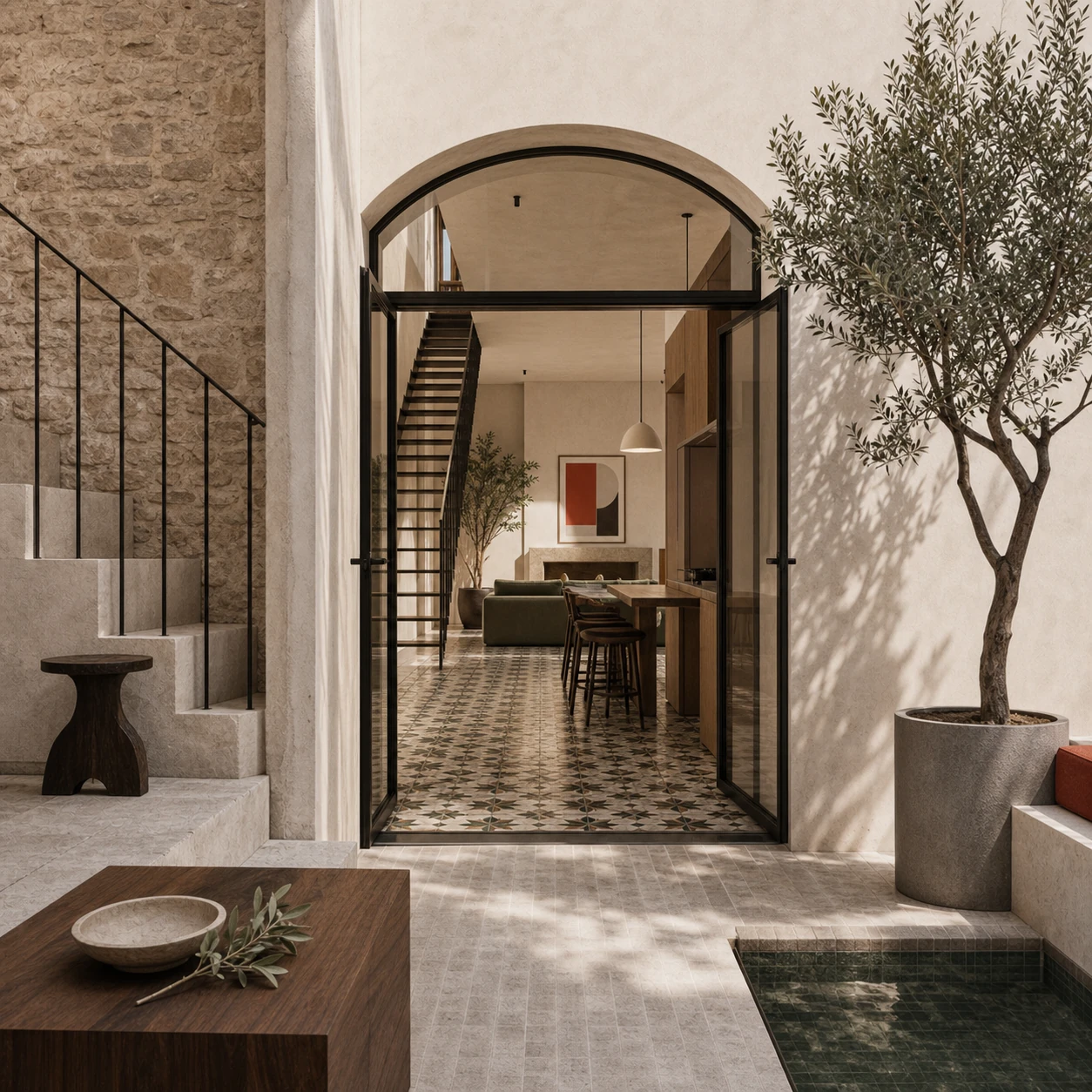
Valencia is often presented to foreign buyers as the easier Spanish alternative: calmer than Barcelona, less expensive than Madrid, more urban than a coastal resort and still close to the sea.
That description is partly true. It is also too simple.
For a buyer planning to renovate, Valencia has its own architectural logic. The city combines historic buildings, compact apartments, post-war blocks, beach-adjacent neighborhoods, expanding districts and protected fabric. A property can look straightforward in a listing and still carry legal, technical or community risks that only appear once the project is being priced.
The opportunity in Valencia is not just to buy before prices rise. It is to buy the right building, with the right scope, before the renovation becomes a problem.
Valencia Is Not One Renovation Market
Ciutat Vella attracts buyers who want history, walkability and character. It can also bring protected elements, narrow access, older structure, shared-building issues and stricter technical review.
Russafa and Ensanche appeal to buyers who want urban life, restaurants and strong rental demand. Apartments can have good bones, but older services, acoustic comfort, stairs, lifts and previous works need careful checking.
El Cabanyal and the maritime districts offer a different type of opportunity: smaller buildings, local character, beach proximity and strong identity. The risk is assuming every property can be treated like a simple cosmetic renovation.
Campanar, Benimaclet and newer residential areas may offer more practical layouts, lifts, parking and easier building systems, but the design challenge is different. The work is often less about saving character and more about creating value from a generic base.
What Foreign Buyers Should Check Before Buying
A Valencia property should be checked before the buyer commits emotionally.
Key checks include:
- Whether the property matches the registry and cadastral information.
- Whether previous works were declared correctly.
- Whether the building has protected status or catalogued elements.
- Whether the intended work is a simple reform, a more substantial rehabilitation or a license-level intervention.
- Whether structure, facade, roof, shared systems or common areas may affect the project.
- Whether the building has unresolved community issues.
- Whether the proposed layout depends on moving kitchens, bathrooms, drainage or ventilation.
- Whether contractor access, waste removal and working hours are realistic.
This is where foreign buyers often lose control. They buy the apartment they like, then discover the building does not support the project they imagined.
Permits and Responsible Declarations
Valencia uses different municipal routes depending on the type and scope of works. Some reform works may be handled through declaration routes when they do not affect structure or protected elements. More significant works involving structure, change of use, facade impact or complex rehabilitation can require a fuller license process.
The exact route should be checked against the property and scope, not guessed from another project. The renovation strategy should be defined before the buyer accepts a contractor’s price. Otherwise the price may reflect an incomplete understanding of what the city, building and community will allow.
Renovation Cost: Why the Cheapest Apartment Is Not Always Cheaper
Two apartments of the same size can have very different renovation cost depending on condition of plumbing and electrical systems, bathroom and kitchen positions, structural constraints, window quality, acoustic comfort, lift and access, moisture or facade issues, documentation of previous works and the level of finish expected for resale, rental or second-home use.
A cosmetic refresh is one project. A full renovation that rewires, replumbs, relocates wet areas, replaces windows, upgrades climate comfort and resolves building defects is another. The buyer should treat contingency as part of the project, not as a sign that planning has failed.
The Most Common Mistakes
The mistakes in Valencia are usually practical:
- Buying only because the price looks better than Barcelona or Madrid.
- Underestimating the technical condition of older buildings.
- Assuming a contractor can solve permit questions later.
- Ignoring protected-building issues in historic areas.
- Treating damp, ventilation and acoustic comfort as secondary.
- Designing for short-stay appeal without understanding building rules.
- Forgetting that resale value depends on documentation as well as finishes.
Good design cannot repair a poor purchase decision. It can only work with the building the buyer has chosen.
The Architectural Opportunity
Valencia rewards renovation that feels clear, durable and specific. The strongest projects usually improve light, storage, ventilation, circulation and material quality without trying to force the property into a generic Mediterranean image.
Architecture should make the property easier to use, easier to value and easier to manage from abroad.
When Wolfblanc Gets Involved
Wolfblanc works with international buyers who need architectural judgment before, during or after purchase. In Valencia, that means assessing the property as a legal, technical and design question at the same time. Before purchase, we can help identify whether the intended renovation is realistic. After purchase, the work becomes design development, permit route, contractor coordination and making sure the project matches the buyer’s intended use.
Considering a property purchase or renovation in Valencia? Tell us about the property, location and what you want to do using the form below. We respond within 48 hours.