






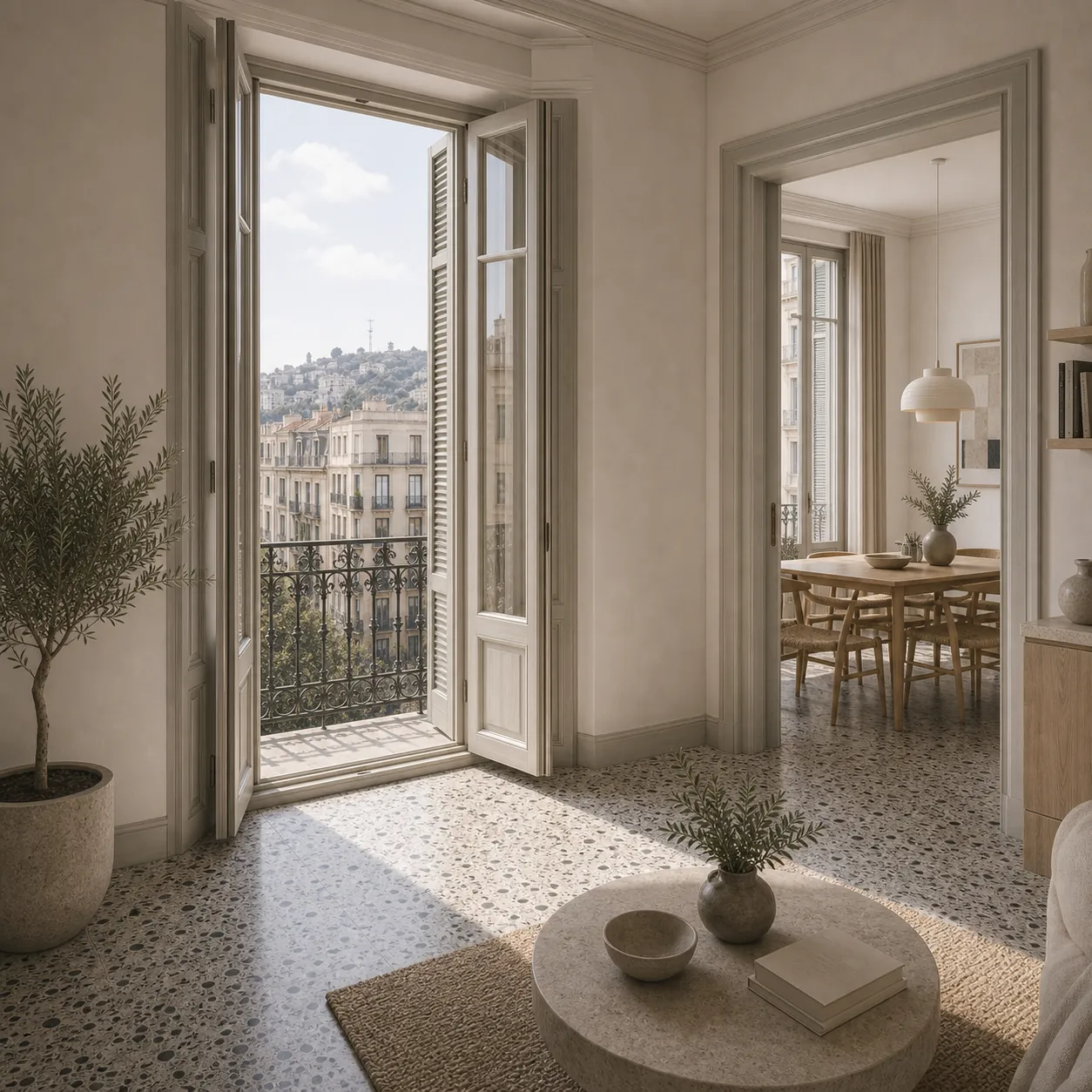
Thessaloniki är inte Aten med en lägre prislapp. Staden har sin egen arkitektoniska logik, sin egen köparpsykologi och sina egna renoveringsrisker.
För internationella köpare är staden attraktiv eftersom den kombinerar historisk struktur, stadsliv med havsutsikt, universitetsefterfrågan, en stark hyresmarknad och lägre inträdespriser än de mest uppenbara Medelhavsdestinationerna. Men det gör inte varje lägenhet, maisonetter eller byggnad till ett bra projekt.
Möjligheten i Thessaloniki är inte bara att köpa billigare. Det handlar om att förstå vilket byggnadsbestånd som kan förbättras, vilka områden som stöder långsiktigt värde och vilka tekniska problem som bör kontrolleras innan köpet blir dyrt.
Thessaloniki belönar köpare som förstår byggnaden
Många utländska köpare tittar först på grannskapet, utsikten och priset. De spelar roll. Men i Thessaloniki är själva byggnaden ofta viktigare.
Staden har olika lager av byggnader: tidigt 1900-tal, flerbostadshus mellan kriget, polykatoikyer efter kriget, kvarter från 1970- och 1980-talen, nyare förortsbostäder och ombyggda kommersiella lokaler. Två lägenheter på samma gata kan ha helt olika renoveringsrisker beroende på struktur, juridisk status, gemensamma utrymmen, fasadens skick, hiss, värmesystem, VVS-dragningar och om tidigare förändringar har deklarerats korrekt.
Därför bör ett köp inte bedömas enbart utifrån objektet. Det krävs arkitektonisk noggrannhet innan köparen binder sig känslomässigt.
Centrum och strandpromenad: Stark efterfrågan, strängare begränsningar
Den historiska stadskärnan Ladadika, strandpromenaden och gatorna runt Aristotelous är de delar av Thessaloniki som de flesta internationella köpare först känner igen. De erbjuder promenadvänlighet, gästfrihet, kulturliv och en stark attraktionskraft för korttidsboenden.
De kräver också disciplin. Äldre byggnader kan ha kulturarvshänsyn, gemensamma system, trånga åtkomstmöjligheter, svår logistik och grannkänslighet under arbeten. En liten lägenhet med bra ljusinsläpp kan bli en stark pied-à-terre eller uthyrningstillgång. En dåligt dokumenterad enhet i en sliten byggnad kan bli en långsam renovering med begränsad potential.
Ano Poli: Karaktär, åsikter och planeringskänslighet
Ano Poli har en annan rytm. Den erbjuder utsikt, historia, mindre gator och en mer lokal atmosfär. För köpare som söker karaktär snarare än en vanlig stadslägenhet kan det vara lockande.
Risken är att charm kan dölja komplexitet. Brant tillfart, äldre konstruktion, skyddat material, oregelbundna tomter och renoveringslogistik kan alla påverka kostnad och tidsram. En fastighet i Ano Poli bör noggrant kontrolleras med avseende på juridisk status, strukturellt skick, tillåtna arbeten och om köparens avsedda användning är realistisk.
Kalamaria och östra sidan: Mer bostadsområde, ofta mer praktiskt
Kalamaria och de östra distrikten lockar köpare som vill ha en mer bostadsmässig bas, närhet till havet och mindre beroende av den historiska stadskärnan. Byggnadsbeståndet är ofta mer praktiskt för renovering än de mest begränsade centrala områdena.
Lägenheter kan ha bättre planlösningar, balkonger, parkeringsmöjligheter och byggsystem som är enklare att arbeta med. För familjer, långtidsuthyrning, fritidshus och köpare som vill ha ett användbart vardagsliv snarare än en ren turistisk tillgång, kan den östra sidan av Thessaloniki vara mer förnuftigt än att jaga en liten centralt belägen lägenhet till varje pris.
Universitetsefterfrågan förändrar investeringslogiken
Thessalonikis studentpopulation ger staden en hyreslogik som många utländska köpare underskattar. Små lägenheter nära universitet, transporter och centrala tjänster kan fungera bra om de planeras korrekt.
Men studenters efterfrågan bör inte användas som en ursäkt för svag design. En kompakt enhet behöver fortfarande förvaring, hållbara material, korrekt belysning, akustikkontroll, effektiv uppvärmning och en planlösning som känns större än den är. Billig renovering åldras ofta snabbt vid uthyrning.
Vad du bör kontrollera före köpet
Innan köparen köper en fastighet i Thessaloniki för renovering bör hen kontrollera den juridiska och tekniska dokumentationen, inte bara det begärda priset.
Nyckelkontroller inkluderar:
- Om fastigheten har tydliga ägardokument.
- Huruvida tidigare arbeten deklarerats korrekt.
- Huruvida enheten och byggnaden överensstämmer med de officiella planerna.
- Huruvida strukturella förändringar är möjliga.
- Huruvida VVS, dränering och eldragningar stöder den avsedda layouten.
- Huruvida byggnaden har olösta problem i gemensamma utrymmen.
- Oavsett om det gäller fasad, balkong, tak eller delade system kan det skapa framtida kostnader.
- Huruvida de planerade arbetena kräver bygglov via det grekiska e-Adeies-systemet.
I Grekland hanteras bygglovsförfaranden via Greklands tekniska kammares elektroniska e-Adeies-systemet. Detta är inte en detalj som ska vänta till efter köpet. Det påverkar tidsram, omfattning och risk.
Renoveringskostnader: Där köpare blir överraskade
Det billigaste köpet är inte alltid det bästa projektet. Renoveringskostnaden i Thessaloniki beror mindre på stadens genomsnitt och mer på byggnadens skick och arbetets ambition.
Utländska köpare blir ofta överraskade av fem kostnadsområden:
- Begränsningar för delade byggnader som begränsar vad som kan ändras.
- Gamla VVS-vägar som gör en enkel badrumsplan dyr.
- Uppgraderingar av värme och kyla i byggnader som inte är konstruerade för nuvarande komfortförväntningar.
- Problem med balkong, fasad eller vattentätning som inte kan lösas enbart inuti lägenheten.
- Legaliserings- eller dokumentationsarbete kopplat till tidigare odeklarerade ändringar.
Designmöjligheten
Renoveringen av Thessaloniki bör inte kopiera ett generiskt medelhavsutseende. Staden har en stark identitet: urban, mångsidig, social, praktisk och mindre polerad än marknader som huvudsakligen är byggda kring lyxfastigheter.
Bra design här bör respektera det. Den bör förbättra ljus, förvaring, hållbarhet, cirkulation och komfort utan att fastigheten känns avskild från staden. Målet är inte bara att renovera. Målet är att göra fastigheten tydligare, lugnare och lättare att värdera.
När Wolfblanc blir inblandad
Wolfblanc arbetar med internationella köpare som behöver arkitektonisk bedömning före, under eller efter köpet. I Thessaloniki innebär det att man ser fastigheten som en juridisk, teknisk och designmässig fråga samtidigt.
Det mest användbara tillfället att involvera en arkitekt är innan köparen binder sig helt. I det skedet kan projektet fortfarande formas: om man ska köpa, vad man ska förhandla om, vad man ska undvika, vilken budget man ska avsätta och vilken typ av renovering som är realistisk.
Funderar du på att köpa eller renovera en fastighet i Thessaloniki? Berätta om fastigheten, läget och vad du vill göra med hjälp av formuläret nedan. Vi svarar inom 48 timmar.