Spatial strategy for places that must evolve over time.
- Masterplanning & spatial strategyDefinition of the spatial vision, strategic zoning, densities, development capacity and phasing for large sites and districts.
- Urban regenerationRevitalisation of underused or degraded urban fabric, including industrial areas, historic centres, peripheral sites and heritage assets.
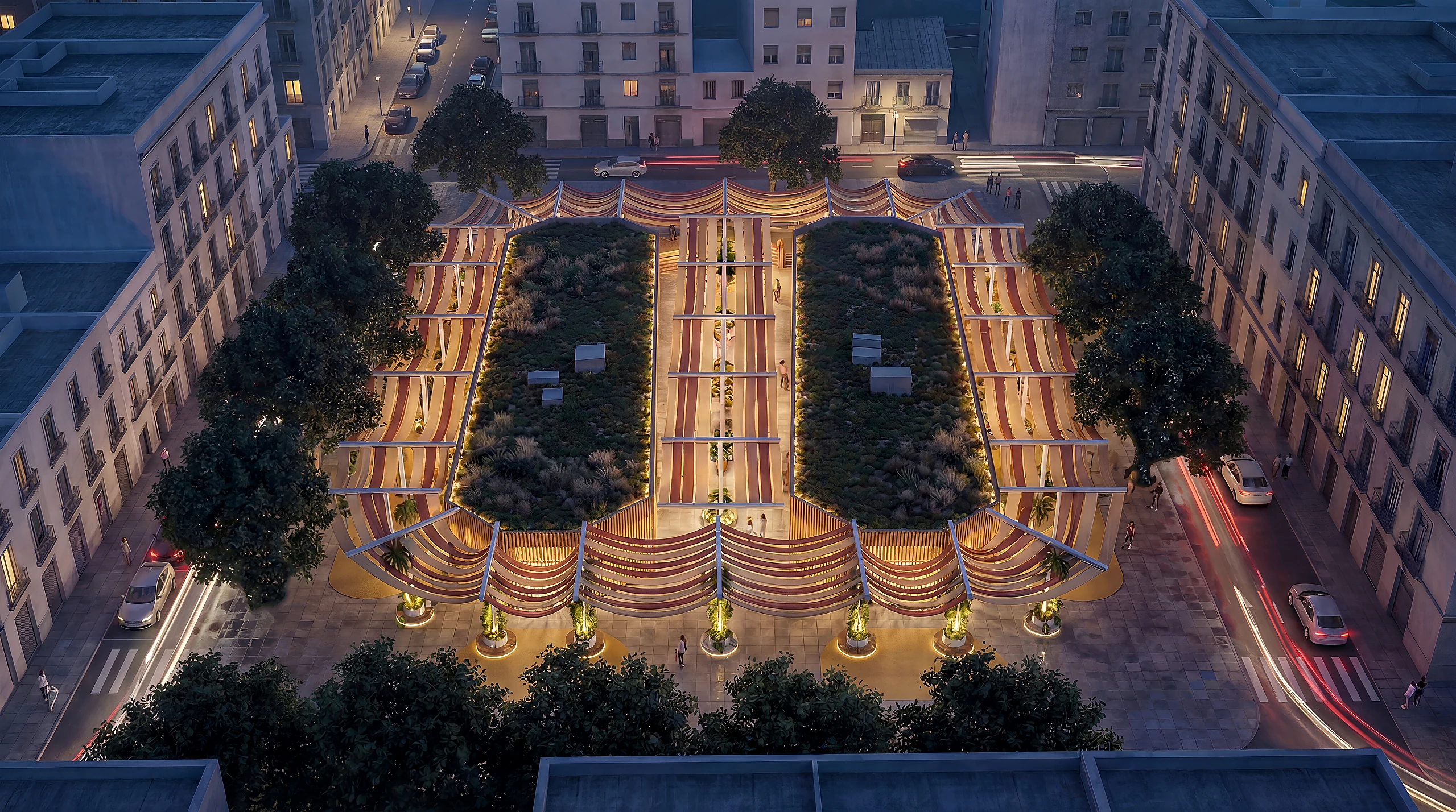
- Public space designSquares, green corridors, streets, waterfronts and civic axes designed to support movement, social life, commercial activation and resilience.
- Mobility & movementAnalysis of pedestrian, cycling, public-transport and vehicle flows, with clear street hierarchy and sustainable mobility principles.
- Land use & stakeholder communicationAssessment of uses and development potential, supported by clear material for authorities, investors, communities and public consultation.
Our approach
From territorial analysis to an adaptable masterplan. We begin by reading the territory: its history, street structure, existing uses, movement patterns, environmental conditions and heritage value. From that evidence we define a strategic vision, development objectives and the spatial principles that must remain consistent as the project evolves. The masterplan then coordinates zoning, density, public-space networks, mobility and phasing, a flexible framework within which each building, landscape and investment decision can develop over time.
Why Wolfblanc
- Architecture at urban scale
We connect territorial strategy with the design of streets, blocks, public spaces and the relationship between buildings and the city. - Planning and feasibility
Spatial ambition is tested against land use, density, access, technical constraints, phasing and realistic development capacity. - Public-space sensitivity
Landscape, mobility, climate and everyday civic use are treated as core infrastructure rather than residual space between buildings. - Clear stakeholder communication
Plans, diagrams and narratives are prepared to support decisions by authorities, investors, project teams and communities. - Cross-market perspective
Our work across Spain, Sweden and Greece combines local planning coordination with a consistent architectural and environmental methodology.