


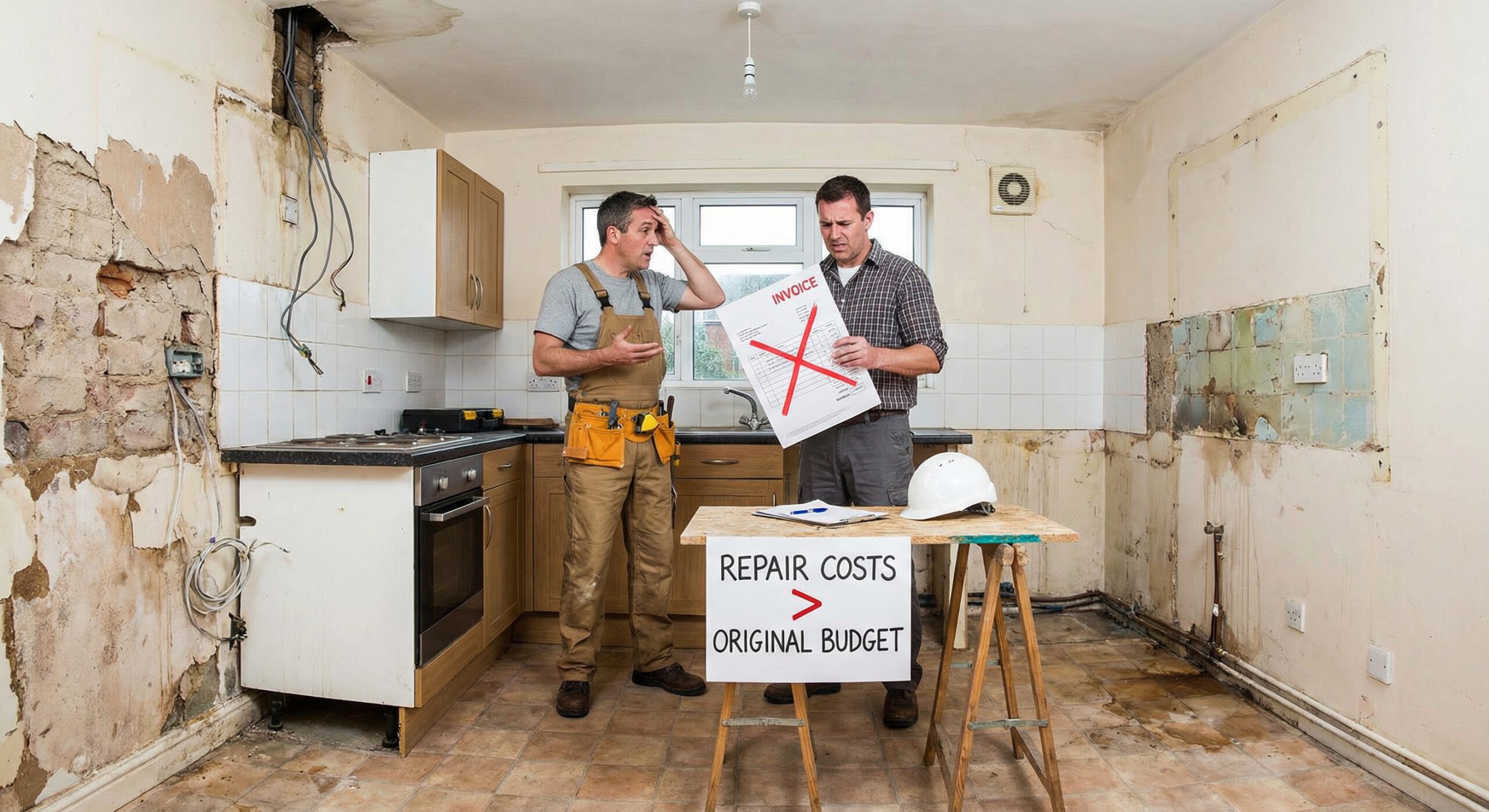
Every architect who works on residential renovation has a mental catalogue of mistakes they see repeatedly. Not exotic, unpredictable errors but the same patterns, project after project.
The reason these patterns persist is that they usually do not feel like mistakes at the time they are made. They feel like reasonable decisions, often money-saving ones. The problem only becomes clear later, when fixing them costs more than the original savings, or sometimes more than the original work.
This guide covers the ones worth knowing about before you start. Understanding how the renovation process is supposed to work makes it easier to see where these mistakes typically enter.
Starting Construction Before Completing the Design
The pressure to get started is understandable. The permit is in, the contractor is available, and sitting on a property that is not yet generating income or being used feels wasteful.
But starting construction before the execution design (the detailed drawings that contractors actually build from) is complete transfers enormous decision-making power to the contractor, who has no stake in your preferences and every incentive to choose the easiest or cheapest option when the design is ambiguous.
Every day of construction that proceeds without complete technical documentation generates decisions made without your input. Some of them are fine. Some of them fix choices that would have cost nothing to make differently at design stage and cost thousands to change after construction. This is precisely the problem that BIM-based documentation is designed to prevent.
The discipline of completing the design before starting construction is not bureaucratic caution. It is the primary mechanism for achieving the result you designed.
Choosing a Contractor on Price Alone
A quote that is 20% below the market average is not a good deal. It is a signal.
The signal might be: lower-quality materials specified (or substituted during construction). An inexperienced workforce. Unrealistic assumptions about timeline that will generate change orders. Or a plan to recover margin on variations when the design is not precise enough to prevent them.
The gap between a responsible contractor at fair market rates and a cheap contractor who causes problems during construction is rarely recovered. The direct costs of fixing errors, correcting non-compliant work, and managing disputes exceed the apparent savings within most renovation projects. Our guide to finding and managing a contractor in Spain covers how to evaluate contractors properly.
Getting three comparable quotes and selecting among the top two (not the cheapest) is the right framework. The two-question reference check, did the project finish on budget, and did the client recommend them without qualification, is worth more than any amount of testimonials on a contractor’s own website.
Not Budgeting for the Systems
This is the renovation equivalent of buying a car and forgetting to budget for fuel.
In older properties across Spain, Greece, and Sweden, the cosmetic renovation (new floors, fresh paint, updated kitchen and bathroom surfaces) is what the client sees and plans for. The electrical installation that is three decades past its expected lifespan, the plumbing that will need full replacement, the complete absence of thermal insulation in the wall cavity, the HVAC system that does not exist yet: these are not glamorous budget items but they are the majority of the renovation cost in many older properties.
Clients who budget for the visible renovation and discover mid-project that the systems need full replacement are not in a position to make good decisions at that point. They either do the systems work on a compressed timeline with reduced oversight, skip elements they should not skip, or blow significantly past their budget. Our Madrid renovation guide gives realistic cost ranges that include systems work.
The solution is a proper pre-renovation assessment, ideally including opening some wall cavities to inspect what is actually there, before the budget is set.
Acoustic Problems That Are Sealed In
Acoustic performance between floors and between rooms is one of the most common renovation regrets. It is also one of the most expensive to fix after the fact.
In a building with concrete floors and tiled surfaces, impact sound transmission, footstep noise, scraping furniture, is significant. The solution during renovation is acoustic underlays beneath the new floor finish, which adds modest cost and essentially no disruption. After the floor is finished and the lower ceiling is complete, correcting poor acoustic performance requires dismantling both.
The same applies to acoustic insulation between apartments or between rooms with different acoustic needs. Once the walls are plastered and painted, adding acoustic insulation requires full demolition and reconstruction. This issue is especially significant in multi-generational homes where different generations have very different noise tolerances.
Acoustic specifications should be in the project documents before the contractor starts work, not addressed when occupants start complaining after handover.
Designing for the Photographs Rather Than for How You Live
There is a specific category of renovation decision that looks excellent in photographs and is irritating to live with.
Open-plan layouts without any acoustic separation, so that a child practicing the piano is audible throughout the entire apartment. Concrete floors throughout, beautiful in photographs, freezing in winter and unforgiving if you drop anything. All-white kitchens that require constant maintenance to look the way they do in the photos. Kitchens designed around visual impact with no thought for how a kitchen is actually used (no workspace near the hob, inadequate storage, poor lighting at countertop level).
The test for every design decision is not “will this look good in photographs” but “will this work well for the people living here three years from now, when the novelty has worn off and the space is just where they live.” The two answers are often the same. When they are not, the second question wins. How architecture affects wellbeing long after the initial impression has faded is central to how we approach every project.
Under-specifying the Wet Rooms
Bathrooms and wet rooms are where renovation shortcuts create the most expensive problems.
Waterproofing that is insufficient, incorrectly applied, or stops short of where it needs to be creates moisture damage inside wall and floor structures that is invisible until it becomes a significant structural and health problem. Rectifying moisture damage that has penetrated wall structures typically means stripping the tile, the adhesive, the screed, the waterproofing layer, and in some cases the underlying structure, and starting again.
In Sweden, bathroom waterproofing standards are strictly regulated and must be applied by certified contractors. In Spain and Greece, the standards exist but enforcement is more variable, which makes specifying and verifying correct execution even more important. What a quality bathroom renovation involves and costs is covered in our guide to bathroom renovation in Spain.
The cost of correct waterproofing from the start is modest. The cost of correcting incorrect waterproofing three years later is not.
Planning a renovation in Spain, Greece, or Sweden and want to avoid the mistakes that cost most? Tell us about your project using the form below and we will respond within 48 hours.