


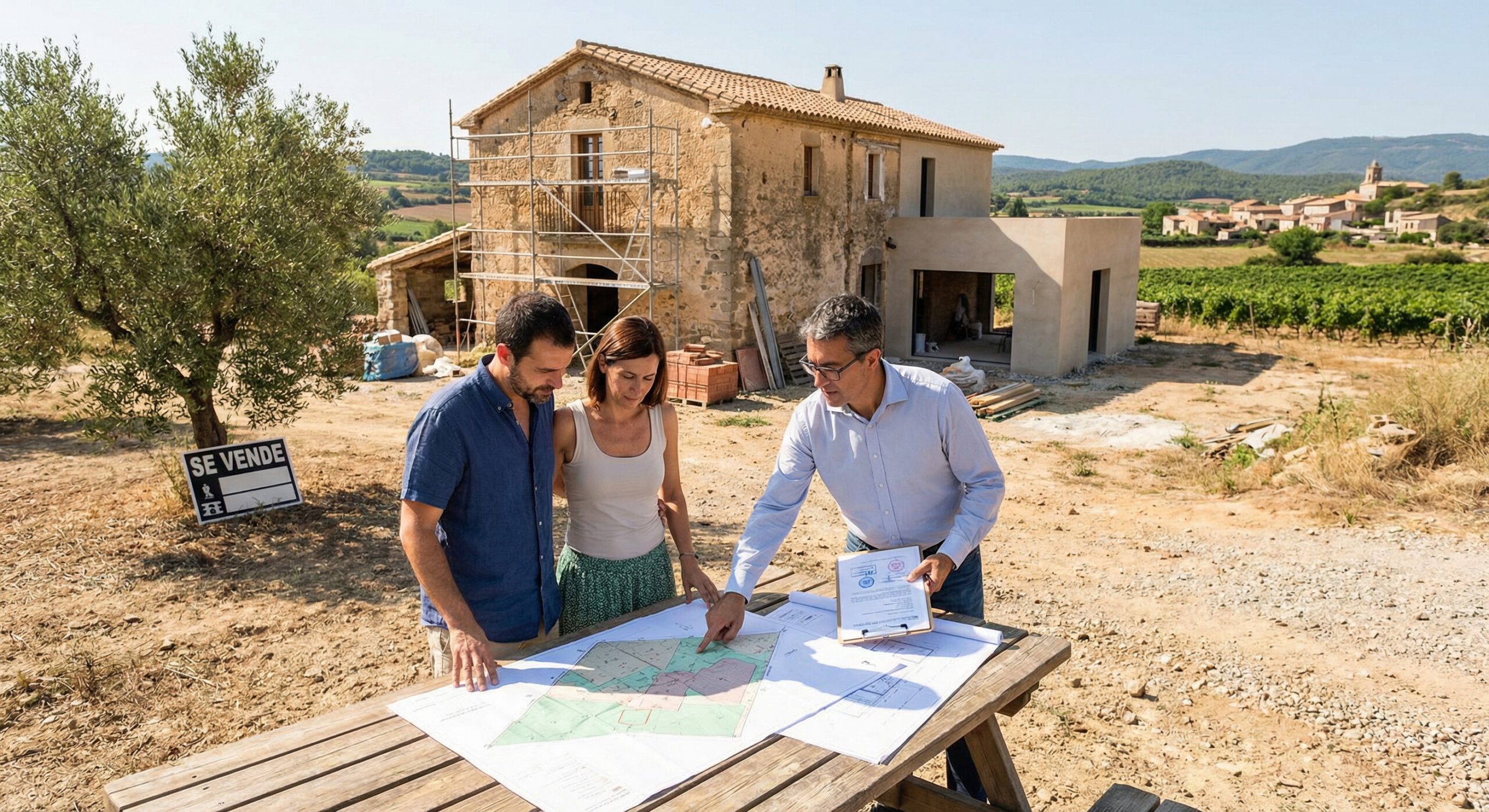
The appeal of a rural property in Spain is obvious. Space, quiet, landscape, the opposite of city density. The complications of rural property in Spain are less obvious until they become very real.
Land classification in Spain’s planning system determines not just what you can build but in some cases whether you can legally live in an existing building. Getting clarity on this before signing a purchase agreement is one of the most important due diligence steps for rural property buyers. Before any of this, non-Spanish buyers need to understand the NIE and NIF requirements for purchasing property in Spain.
The Three Land Classifications That Matter
Spanish land is classified into three broad categories under national and regional planning legislation, though regional names vary:
Suelo Urbano (Urban Land): Land that has all the services and infrastructure of an urban area and is classified for development. In rural contexts, this typically means land within or immediately adjacent to a village or town with established urban structure.
Suelo Urbanizable (Developable Land): Land designated in the planning plan for future urban development. Development rights exist in principle but typically require the completion of a reclassification and urbanization process before building permits can be granted.
Suelo No Urbanizable (Non-Developable Land): Rural land that is not designated for urban development. This is the classification that covers most of Spain’s rural and agricultural land, and it is the one that creates most complications for buyers.
Within suelo no urbanizable, there are sub-classifications that range from purely agricultural land with no building rights to protected natural land where essentially no construction is permitted, to rural land where limited construction is allowed under specific conditions.
What Can Be Built on Rural Land in Spain
The rules for building on suelo no urbanizable are set at regional level (comunidad autónoma) and vary significantly. Some general principles:
New residential construction for primary habitation is generally prohibited on suelo no urbanizable in most Spanish regions. The land is designated for agricultural or natural use, not for housing.
Existing residential buildings on rural land may have legal status as legitimate built structures even if new construction on the same land would not be permitted. This is a critical distinction: buying an existing rural house that was legally constructed under historical permissions is different from buying agricultural land and trying to build a house on it.
Agricultural buildings (outbuildings, storage structures, stables) related to genuine agricultural use may be permitted on rural land in many regions, subject to specific size limits and use conditions.
Rural tourism facilities (casas rurales) may be permitted in some regions subject to specific authorizations.
The Legacy Status Problem
Many rural properties in Spain have buildings on them that were constructed over decades without full compliance with whatever planning rules existed at the time, or constructed before the current planning framework was in place.
These structures may have been partially regularized under various Spanish national or regional amnesty programs for irregular construction (regularizaciones, declaraciones de fuera de ordenación). Or they may remain technically irregular with various degrees of tolerance.
The practical consequence for a buyer: a property that has unauthorized structures may be difficult or impossible to obtain building permits for renovation works, even works that would be unremarkable on a compliant property. It may be difficult to insure or to obtain a mortgage on. And it may create liability exposure for the buyer who knowingly purchases a property with known irregularities.
The pre-purchase legal check for rural properties in Spain needs to go significantly deeper than for urban properties. Specifically: obtain the nota simple from the Land Registry, check the property’s status in the municipal planning register, verify whether any existing structures have full planning permission or legal status, and obtain a written legal opinion on what works can be permitted before committing to a purchase price that assumes renovation. Our guide on buying property in Spain as a foreigner covers the full purchase process in detail.
What Renovation of a Legally Established Rural Property Can Look Like
For a rural property that has full legal status, renovation works follow the same general permit process as urban renovation: Obra Mayor for structural and significant works, simpler procedures for cosmetic works. See our full guide to Madrid building permits and licencia de obras for a detailed breakdown of how the permit system works.
The additional consideration for rural renovation is distance from services and contractor availability. Materials and trades need to travel further to rural sites. Construction costs on rural properties are typically 15 to 30% higher than equivalent urban projects due to these logistics. For a realistic view of what renovation costs in Spain, our honest guide to building costs in Spain gives current figures across project types.
Looking at a rural property in Spain and want to understand what the building rights and renovation possibilities actually are? Tell us about the property using the form below and we will respond within 48 hours.